
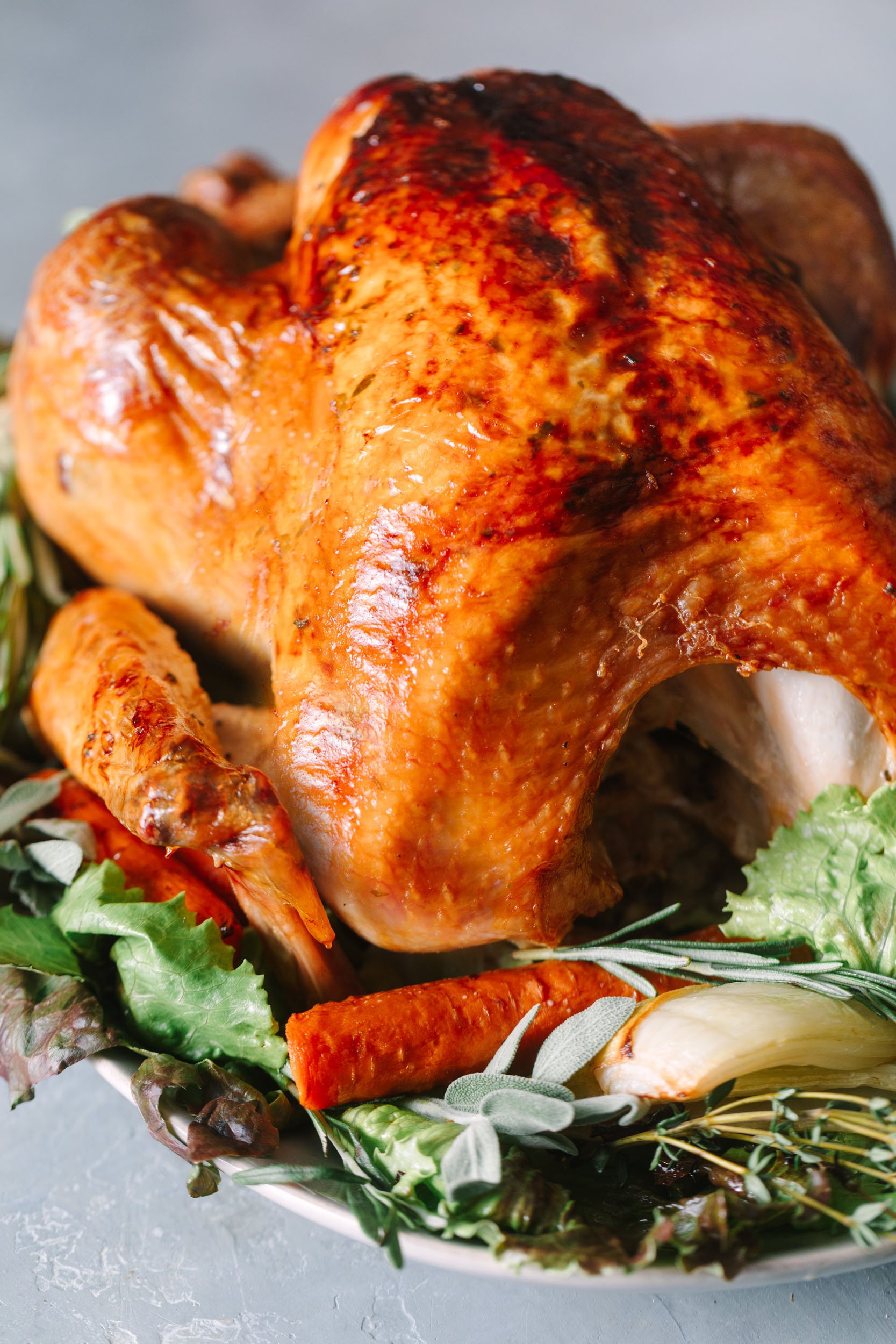
This roasted Thanksgiving turkey is juicy, buttery, herbaceous, and full of bright citrus and warm holiday flavors. The brine seasons the meat all the way through, and the garlic herb compound butter creates crispy golden skin and rich pan drippings.
Want to save this recipe?
Recipe Highlights
- ⏱️ Cook Time: 2½–3 hours
- 🍽️ Serves: 10–12
- 👩🏽🍳 Difficulty: Moderate (beginner-friendly with clear steps)
- 🔥 Flavor: Herb-forward, buttery, citrusy, and savory with golden crispy skin
Cooking a whole turkey can feel intimidating! Especially if it’s your first time hosting Thanksgiving. But don’t worry because this roasted Thanksgiving turkey recipe is written with beginners in mind.
One of the biggest secrets to a tender, well-seasoned turkey is a wet brine. This step adds moisture and seasoning all the way through the meat, so every bite tastes delicious, not bland or dry.
After brining, the next key step is the garlic herb compound butter, which gets rubbed under and over the skin. Rubbing butter under the skin keeps the breast moist and allows the herbs, garlic, and lemon zest to melt into the meat as it cooks.
To finish prepping the turkey, you’ll stuff the cavity with simple aromatics like onion, fresh herbs, and orange slices. This isn’t the same as stuffing the bird with dressing. These aromatics steam inside the turkey as it roasts, adding brightness and moisture.
If you really want to take things up a notch, you can add a Creole butter injection. This gives the turkey even more moisture and a little extra kick of flavor. We use Creole butter injections in our Deep Fried Turkey and Spatchcock Smoked Turkey recipes, and it works beautifully with this roasted version too.
To finish prepping the turkey, you’ll stuff the cavity with simple aromatics like onion, fresh herbs, and orange slices.
Once the turkey is in the oven, you’ll baste and rotate it every 25 minutes with melted garlic butter, which keeps the skin browning evenly and adds layer after layer of flavor.
Keep reading through this post and the Notes section in the recipe card, because I included tons of troubleshooting tips to help with the most common turkey problems.
And don’t forget: this turkey is just the beginning! Be sure to check out the rest of our Soul Food Thanksgiving recipes, including our Southern-style sides, holiday appetizers, collard greens, mac and cheese, dressing, desserts, and more.
Why You'll Love This Thanksgiving Turkey
- It’s beginner friendly but tastes chef-level. Simple ingredients, elevated results.
- It comes out juicy every single time. The wet brine + compound butter combination keeps the turkey moist from the inside out.
- The instructions are simple and clear. Even first-timers feel confident following the step-by-step method.
- The compound butter does all the work. It bastes the turkey as it melts and creates naturally crisp, golden skin.
- The roasted vegetables make incredible drippings. Perfect for gravy lovers or for making broth later.

Ingredients
- Compound Butter: Butter under the skin = moisture. Butter on the outside = golden, crispy skin. Use a high-quality butter like Kerrygold, Vital Farms, Plugrá, or Danish Creamery because they have a higher butterfat content.
- Poultry Herbs: Go for the classic trio of rosemary, thyme, and sage. Together, they create that nostalgic holiday aroma that fills the whole kitchen the moment the turkey hits the oven.
- Vegetables: We use carrots, celery, and onion. When they soften and caramelize, they flavor the pan drippings (which is used to make the gravy). Also, if your roasting pan doesn’t have a rack, these vegetables are necessary because they act as a natural roasting rack, lifting the turkey up so heat can circulate evenly. This also prevents the bottom of the turkey from steaming and ensures a more beautifully roasted bird.
See the recipe card below for full information on the ingredients and quantities.
How to Make a Wet Turkey Brine
For detailed instructions, see our Turkey Brine Recipe.

Step 1. Slice and quarter the oranges, lemons, limes, and onion.

Step 2. In a large pot, heat 1-2 gallons of water (depending on the size of your turkey) until it's warm but not boiling. Stir in the kosher salt and sugar and simmer until dissolved.

Step 3. Add the citrus quarters, garlic, and quartered onion.

Step 4. Then, add the thyme sprigs, rosemary, and sage leaves.

Step 5. Stir mixture, then remove the pot from heat and let the mixture cool to room temperature.

Step 6. Place the turkey in a large food-safe brining bag or brining container. Pour the cooled brine over the turkey, ensuring it’s completely submerged. If needed, add more water to cover the bird fully.

Step 7. Seal (or cover) the container and refrigerate the turkey for at least 4 hours, but preferably overnight (up to 24 hours), to allow the flavors to penetrate the meat.

Step 8. Alternatively, place it in a cooler with ice to keep it cool.

Step 9. After brining, remove the turkey from the brine, rinse it well under cold water, and pat it dry. Place it uncovered in the fridge for a couple of hours to help the skin dry out.
How to Roast a Thanksgiving Turkey (Step-by-Step)

Step 1: Place the orange quarters, onion, and a few sprigs from the poultry herb blend inside the cavity.
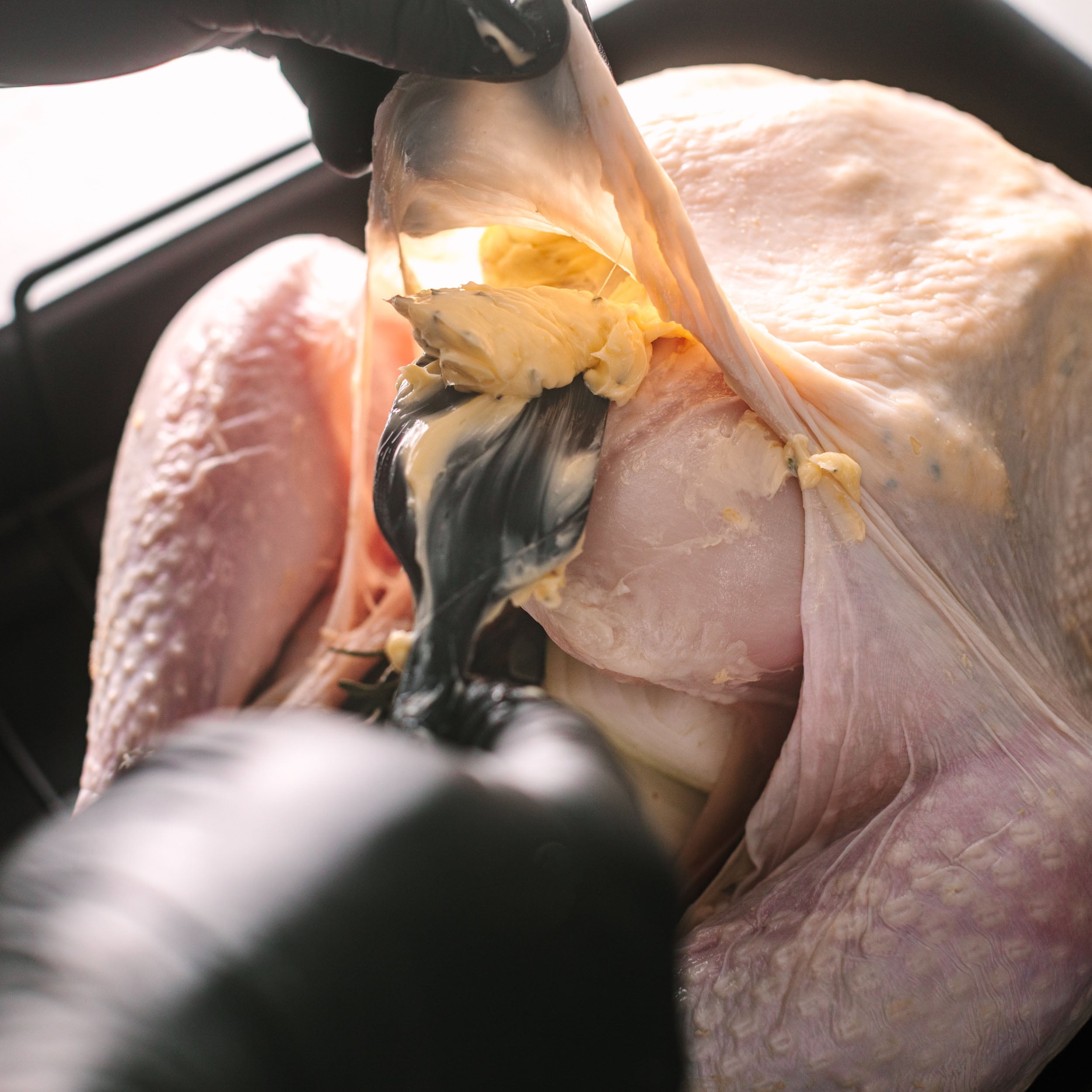
Step 2: Spread garlic compound butter under the skin of the turkey.

Step 3: Rub a light layer of the compound butter all over the outside of the turkey, and save the rest for basting. Make sure you coat the whole bird, including the legs and wings.

Step 4: Add the carrots, celery, and the remaining onion and herbs to the bottom of a large roasting pan. Drizzle the vegetables with a little olive oil so they’re lightly coated. Then place the turkey breast-side up on top of the vegetables.
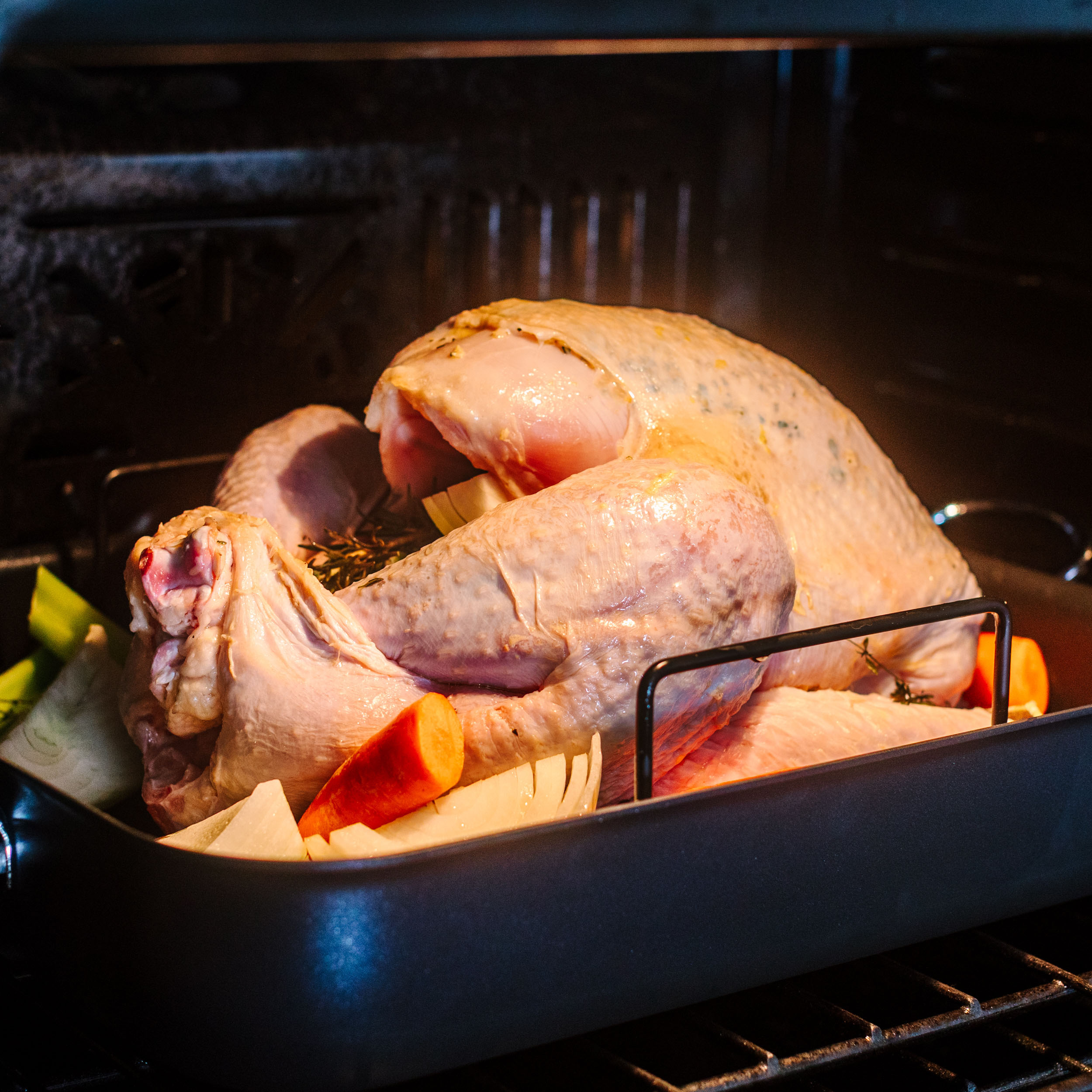
Step 5: Place the turkey in the oven and let it roast.
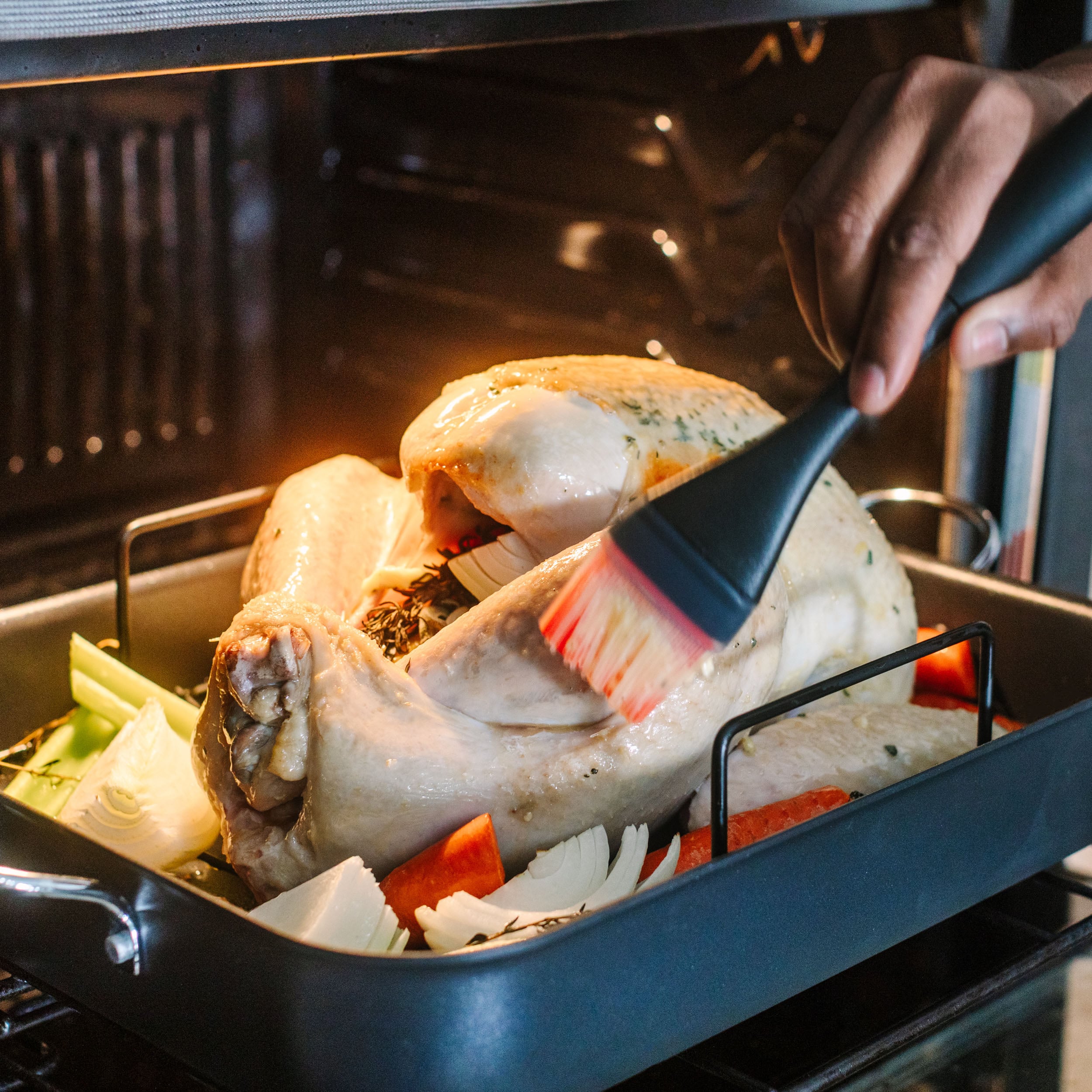
Step 6: Every 25 minutes, baste the turkey with the melted butter by brushing or spooning it over the breast and legs.

Step 5: Once the turkey is done, remove it from the oven and let it rest for 45–60 minutes before carving.

Garlic Compound Butter
Let butter sit at room temperature until soft and spreadable. In a bowl, combine the softened butter with lemon zest, minced garlic, and chopped herbs. Stir until fully mixed and smooth. Set aside until ready to use.
We use ½ pound of butter, however, you can use as much or as little of the compound butter under the skin and on the outside of the turkey as you like. You can also mix in Creole seasoning, Cajun seasoning, or Soul Dust seasoning for extra flavor, if you want.

Thanksgiving Turkey Troubleshooting Tips
1. The breast is browning too fast.
Cover just the breast area with a loose foil tent. Leave the legs and thighs exposed so they keep cooking and browning. Remove the foil during the last 20 minutes so the skin can crisp back up.
2. The sides near the wings aren’t browning.
This is super common because those areas sit lower in the pan and don’t get as much direct heat. To fix it:
- Rotate the turkey 180° every time you baste (this exposes all sides to hotter spots in the oven).
- Tilt the pan slightly while roasting by placing a folded piece of foil under one corner. This lifts the turkey so the lower sides get more heat.
- Use a spoon to brush hot drippings over the lighter areas to speed up browning. In the last 10–15 minutes, raise the oven temp to 400°F to encourage even browning.
3. The skin isn’t getting crispy.
- Make sure the turkey skin is very dry before adding butter.
- Don’t cover the turkey with foil too early.
- Use convection roast if your oven has it to help crisp the skin evenly.
- Baste with fat, not liquid (use melted butter or drippings). Too much broth or water keeps the skin soft.
4. The bottom of the turkey is soggy
Convection mode helps keep moisture moving so the bottom doesn’t steam. Also, roast the turkey on vegetables or a roasting rack, never flat on the pan. Use carrots, celery, and onion to lift the turkey (our recipe already does this).
Roasted Thanksgiving Turkey FAQs
You don’t have to brine it, but brining makes the turkey juicy, tender, and flavorful.
You can season the hens ahead of time, but cook them fresh. Reheating smoked poultry can dry it out.
Always cook the turkey breast-side up. This gives you crispy skin and even cooking.
Use a meat thermometer. The turkey is done when the thickest part of the thigh reaches 165°F. Don’t guess — always check with a thermometer.
Rotate the turkey 180 degrees every time you baste. Brush hot drippings over the pale spots. If needed, raise the oven temp for the last few minutes.

More Holiday Main Dish Ideas
Looking for more holiday recipes to make? Try these:


If you tried these Roasted Thanksgiving Turkey or any other recipe on our blog, consider leaving us a 🌟 star rating and let us know how it went in the 📝 comments!
📖 Recipe

Roasted Thanksgiving Turkey
Equipment
- Roasting pan (large enough for a 12-lb turkey)
- Roasting rack (optional)
- Basting brush or large spoon (for basting every 25 minutes)
- Meat thermometer (to check for 165°F doneness)
- Aluminum foil (to tent if the turkey browns too fast)
- Carving knife and carving fork (for slicing the turkey)
Ingredients
- Cooks with Soul
Turkey Brine Recipe - 1 whole turkey 12 pounds, thawed
- 1 orange quartered
- 2 onions quartered (yellow and/or white onion, one in the cavity, half for roasting pan)
- 3 carrots cut into chunks
- 3 celery stalks cut into chunks
- fresh herbs rosemary, thyme, sage
Garlic Herb Compound Butter
- ½ pound unsalted butter softened (use more if your turkey is larger than 12 pounds)
- Zest of 2 lemons
- 3 cloves garlic minced
- fresh herbs rosemary, thyme, and sage
Instructions
Brine the Turkey (12–24 hours ahead)
- First, follow the Cooks With Soul wet brine recipe and let your turkey soak in the brine for 12 to 24 hours. When the brining time is done, remove the turkey from the brine, rinse it well, and pat it completely dry with paper towels. Then place it uncovered in the fridge for a couple of hours to help the skin dry out. This step helps the skin get extra crispy later.
Garlic Herb Compound Butter
- Let butter sit at room temperature until soft and spreadable. In a bowl, combine the softened butter with lemon zest, minced garlic, and chopped herbs. Stir until fully mixed and smooth. Set aside until ready to use.
Prep the Turkey
- Preheat your oven to 325°F. Remove the neck and giblets from the turkey cavity and set them aside for gravy. Then gently loosen the skin over the breast and thighs using your fingers or a small spatula. This creates space for the butter to go underneath the skin.
Lightly Stuff the Cavity
- Place the orange quarters, 1 onion (quartered), and a few sprigs from the poultry herb blend inside the cavity. Do not pack the cavity too tight. Leaving space inside helps hot air flow through the turkey so it cooks evenly.
Add Garlic Compound Butter Under the Skin
- Take about ⅔ of the softened garlic herb compound butter and spread it under the skin of the turkey. Try to spread it out as evenly as possible so the butter melts into the meat while it cooks. This helps the turkey stay juicy and gives it great flavor.
Add Garlic Compound Butter on the Outside
- Rub a light layer of the compound butter all over the outside of the turkey, and save the rest for basting. Make sure you coat the whole bird, including the legs and wings.
Prepare the Roasting Pan
- Add the carrots, celery, and the remaining onion and herbs to the bottom of a large roasting pan. Drizzle the vegetables with a little olive oil so they’re lightly coated. Then place the turkey breast-side up on top of the vegetables. The veggies help lift the turkey so heat can circulate, and they create flavorful drippings for gravy. If your roasting pan has a rack, arrange the vegetables around the turkey instead.
Roast the Turkey
- Place the turkey in the oven and let it roast for the first 25 minutes without opening the door. Melt any leftover garlic herb butter while it cooks. Every 25 minutes, baste the turkey with the melted butter by brushing or spooning it over the breast and legs. Each time you baste, rotate the turkey 180 degrees so it cooks and browns evenly. Keep roasting until the thickest part of the thigh reaches 165°F, which usually takes 2½ to 3 hours for a 12-pound bird.
Rest the Turkey
- Once the turkey is done, remove it from the oven and let it rest for 45–60 minutes before carving. This allows the juices to settle back into the meat so every slice stays moist. Save the drippings and roasted vegetables from the pan, they make the best base for your giblet gravy!
Marrekus says
Listen, I cannot deal with dry turkey. Not on my watch. So I set out on a mission to make the juiciest turkey possible and that's why I always brine my birds.
The best part about this recipe is how simple it is. Roasting in the oven feels way less intimidating than frying or smoking. You get a stable cooking environment and steady heat, which makes it easier to control and harder to mess up.