
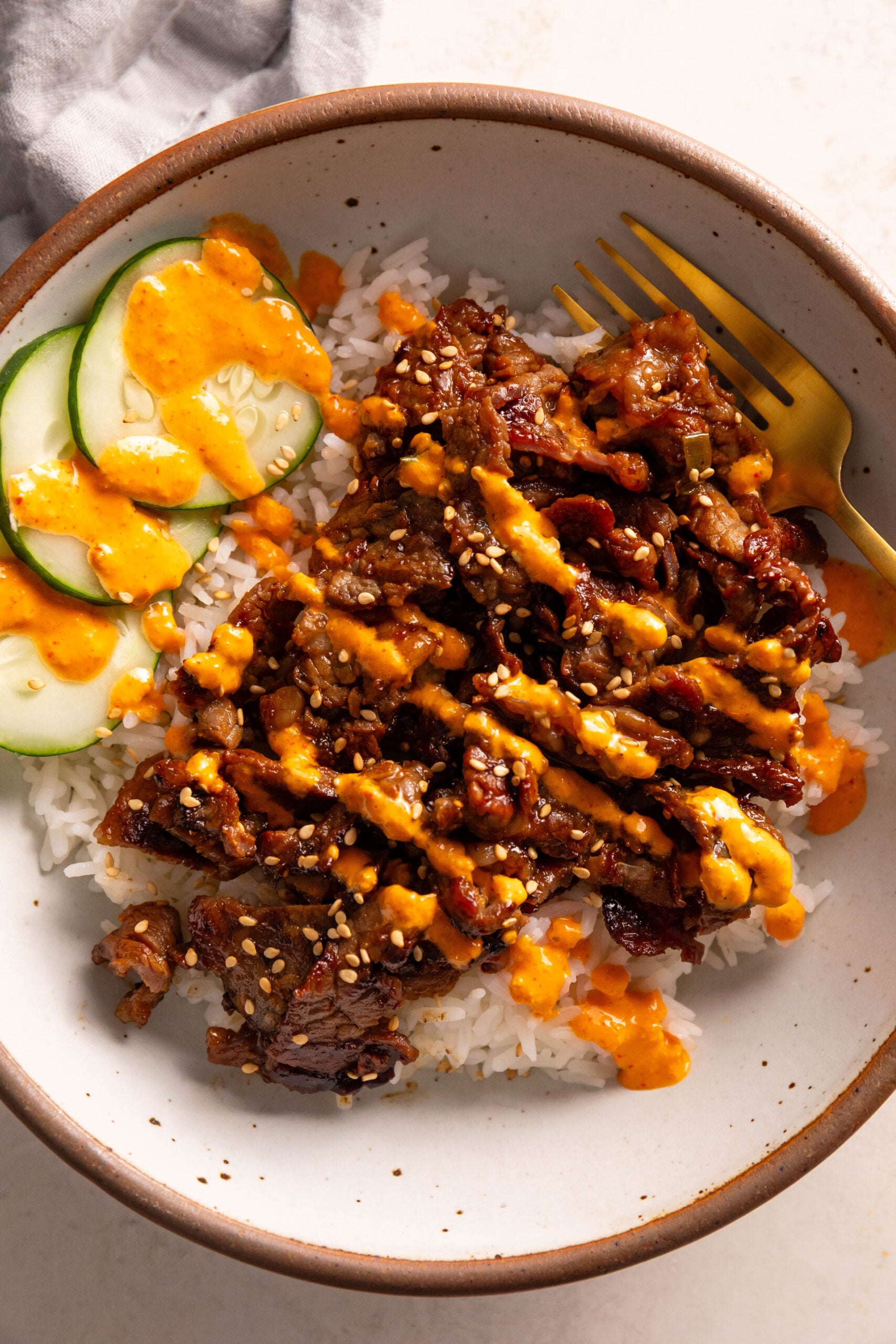
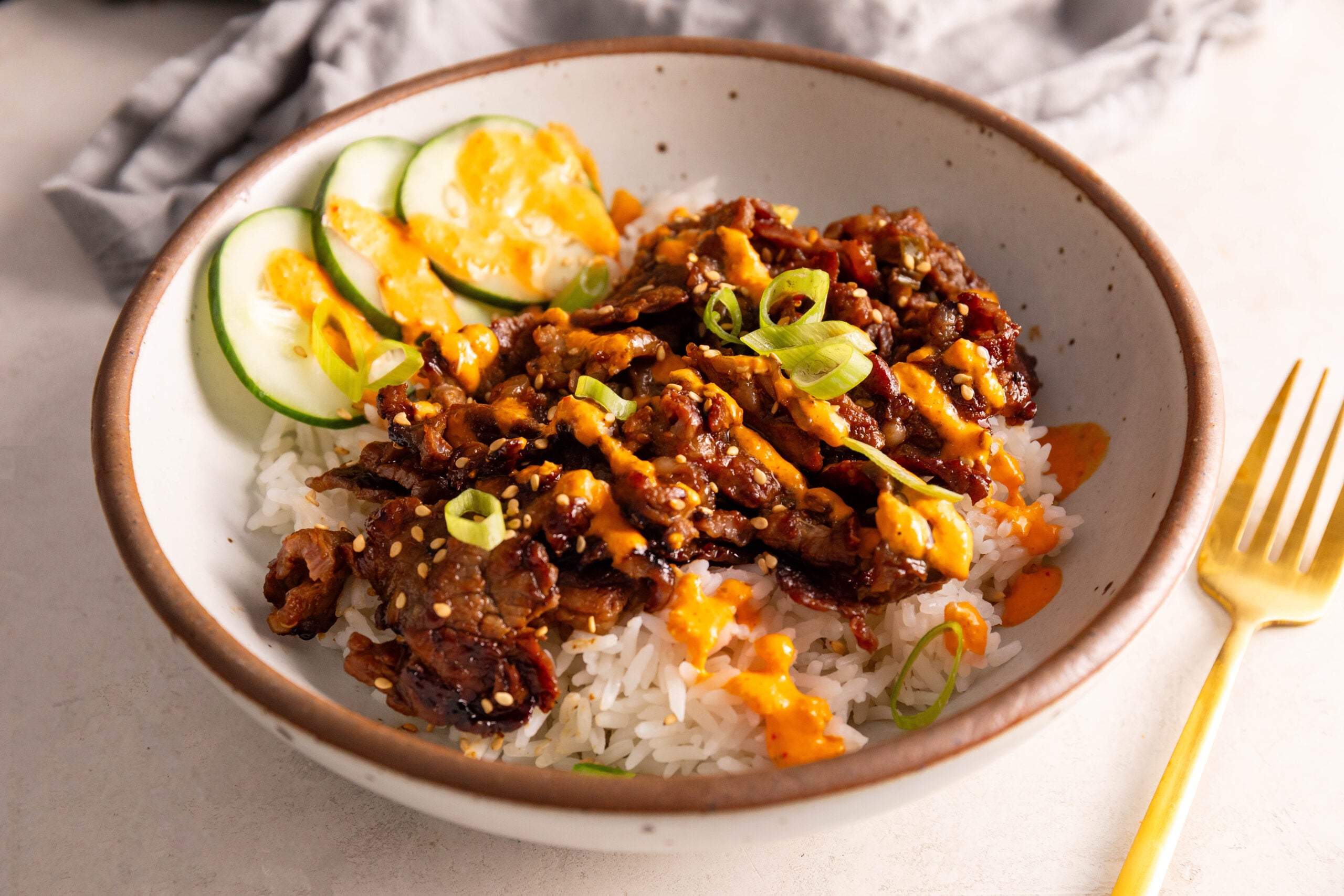
Our Korean-style beef bulgogi bowl features thinly sliced ribeye marinated in a sweet and savory sauce, seared until caramelized, and served over white rice. Each bowl is topped with fresh cucumber, green onions, and a homemade creamy kimchi sauce with a little heat and tang.
Want to save this recipe?
Recipe Highlights
- ⏱️ Cook Time: About 15 minutes (plus 1–2 hours to marinate)
- 🍽️ Serves: 4 people
- 👩🏽🍳 Difficulty: Easy
- 🎯 End Result: Restaurant-worthy Korean beef over rice, topped with fresh ingredients and a creamy, spicy kimchi sauce!
This beef bulgogi bowl recipe is perfect for a flavorful weeknight dinner or meal prep.
While it isn't Southern or soul food, it fits right in with our love for grilling and cooking meat over fire.
There's just something about tender, marinated meat hitting a hot grill and getting those delicious caramelized edges!
It brings together everything we enjoy about cooking: bold flavors, simple ingredients, and good food worth gathering around.
Be sure to also check out these Asian-style chicken wings with chili garlic sauce if you love these flavors!
What is Beef Bulgogi?
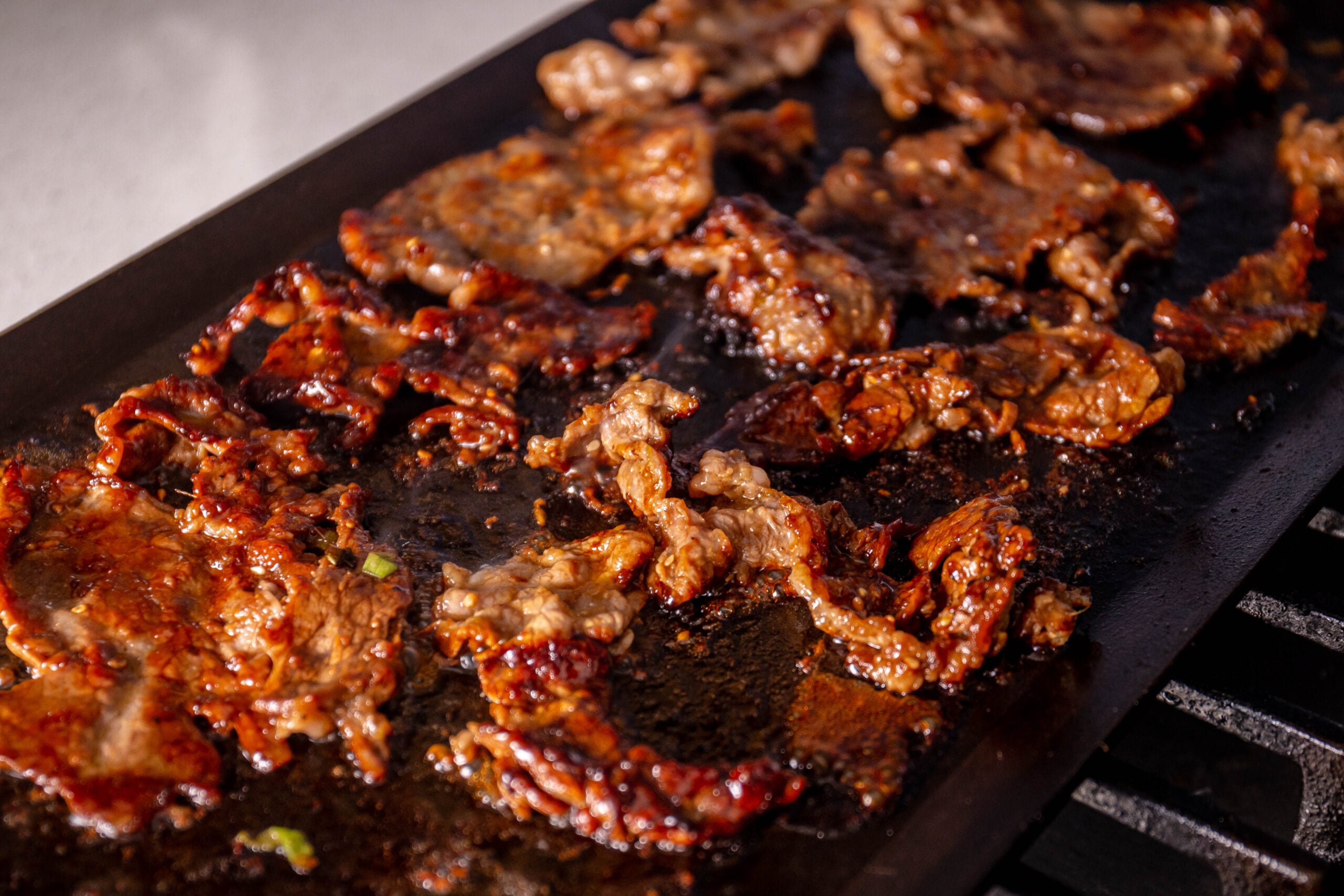
Bulgogi is a popular Korean dish made with thinly sliced beef that's marinated in a mixture of soy sauce, sugar, sesame oil, garlic, and other seasonings.
The name "bulgogi" translates to "fire meat," referring to the traditional method of grilling the meat over high heat.
Ribeye is a popular choice because it's tender, flavorful, and cooks quickly. The marinade gives the beef its signature sweet and savory flavor, while high heat creates delicious caramelized edges.
Why This Recipe Is Better Than the Rest
- We use ribeye, not ground beef. Thinly sliced ribeye gives these bowls a more tender, steakhouse-quality bite.
- Our homemade kimchi sauce sets it apart. Instead of a basic spicy mayo, we use real kimchi and kimchi brine for extra tang and depth of flavor.
- No complicated cooking techniques. You don't need a special Korean BBQ grill or expensive equipment. A hot cast iron skillet works beautifully.
Ingredients
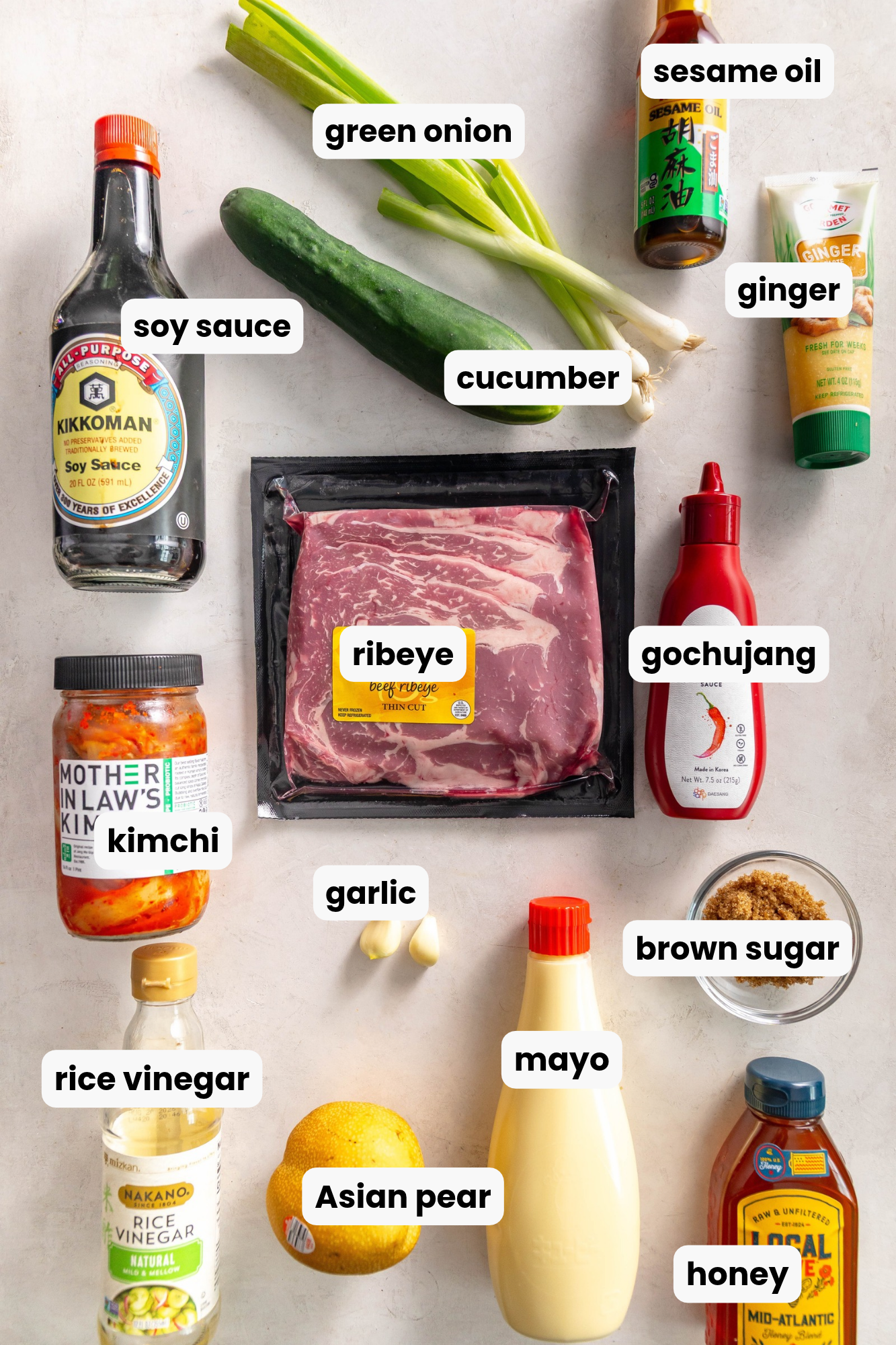
- Thin-Sliced Ribeye: You can sometimes find beef that's already thinly sliced and labeled "shaved steak," "beef for bulgogi," or "Korean BBQ beef" at grocery stores, Asian markets, and butcher shops. Just make sure you're getting ribeye. If you can't find it pre-sliced, buy a boneless ribeye steak and freeze it for about 20–30 minutes to firm up. Then slice it very thinly against the grain using a sharp knife. You can also ask the butcher to slice it for you.
- Asian Pear: Also called Korean pear or nashi pear. You can find it in the produce section of larger grocery stores or at Asian markets. If you can't find one, a ripe Bosc pear or grated apple makes a good substitute. The flavor won't be exactly the same, but either works well in this marinade.
- Gochujang: Look for it in the international or Asian foods aisle at most major grocery stores, usually in a red tub or squeeze bottle. Asian markets also carry it. If you can't find gochujang, you can substitute a little sriracha mixed with miso paste and a pinch of sugar.
- Kimchi: We used store-bought kimchi from a jar for this recipe, so there's no need to make it from scratch! Look for refrigerated jars of kimchi in the produce section, near refrigerated pickles, or in the international foods section of your grocery store. Asian markets typically have several varieties.
See the recipe card below for full ingredient and quantity information.
How to Make a Korean Beef Bulgogi Bowl
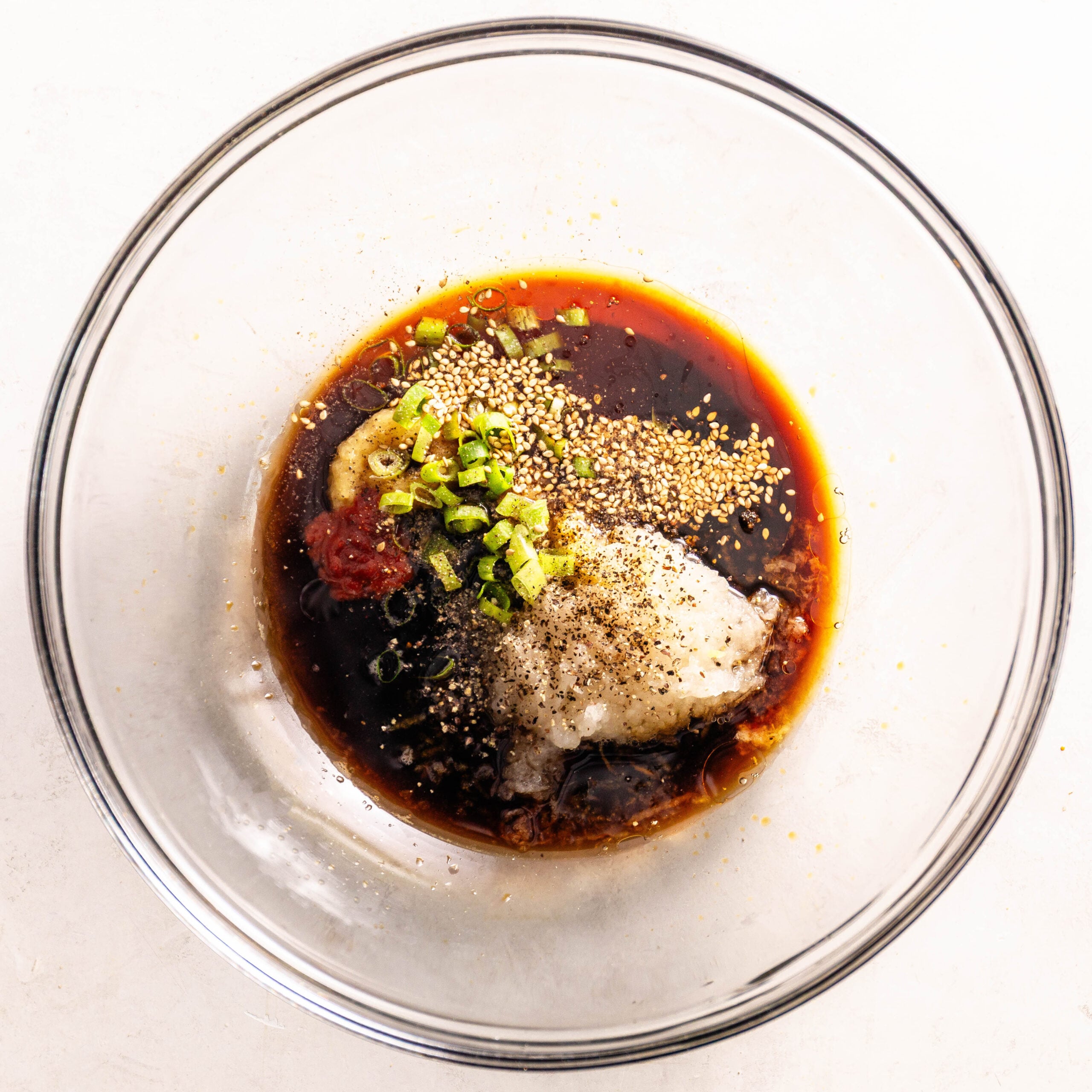
Prepare the marinade: Combine the soy sauce, brown sugar, honey, sesame oil, Asian pear, garlic, ginger, rice vinegar, green onions, black pepper, gochujang, and sesame seeds.
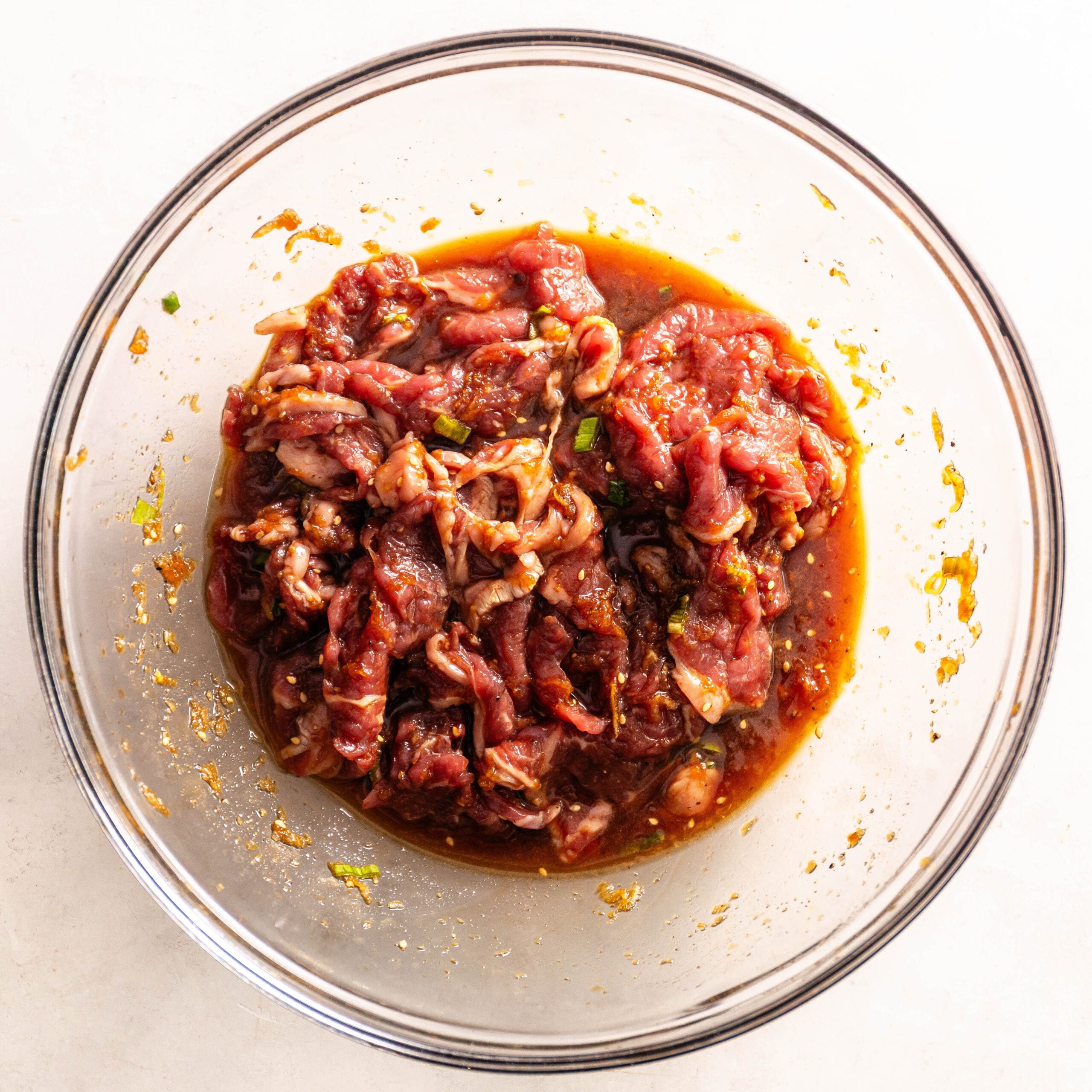
Marinate the beef: Add the thinly sliced ribeye to the marinade and toss to coat. Cover and refrigerate.

Make the creamy kimchi sauce: Blend the mayonnaise, kimchi, kimchi brine, gochujang, rice vinegar, honey, sesame oil, and garlic until smooth. Refrigerate until ready to serve.
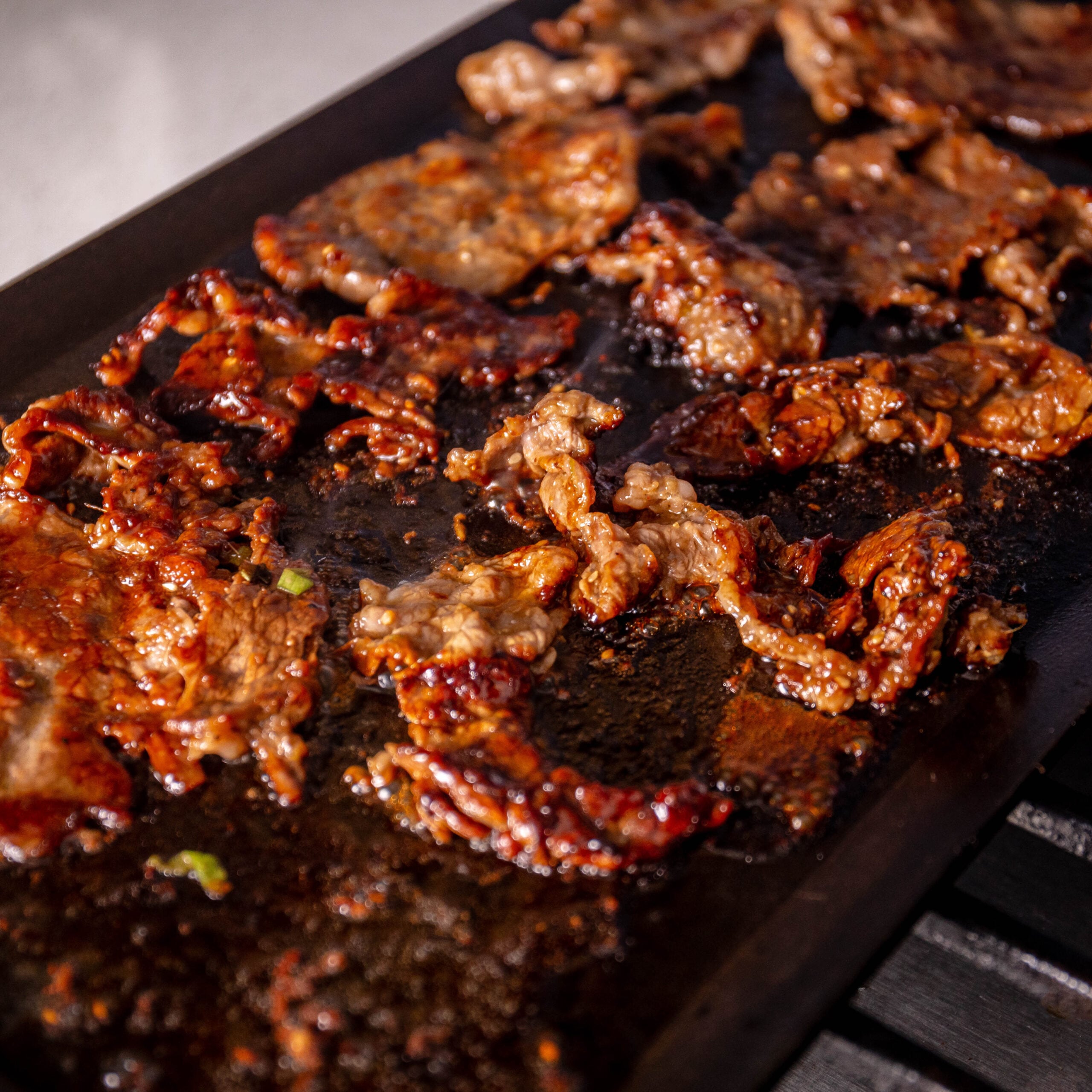
Sear the beef: Cook the marinated ribeye in a hot skillet or on a grill until tender with caramelized edges.
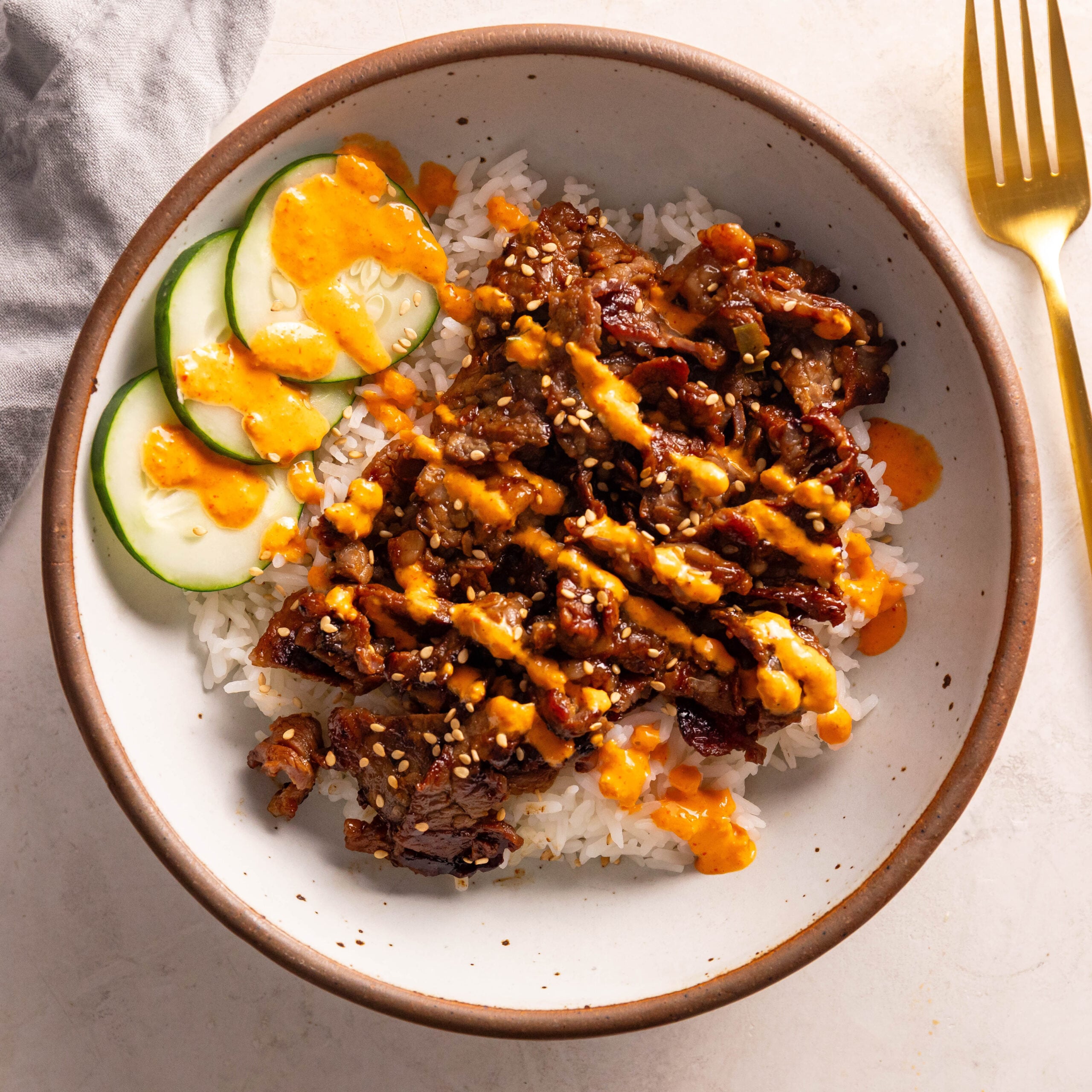
Assemble the bowls: Add rice and bulgogi beef to each bowl. Top with cucumber, kimchi, green onions, creamy kimchi sauce, and toasted sesame seeds.
How to Build the Perfect Bulgogi Bowl
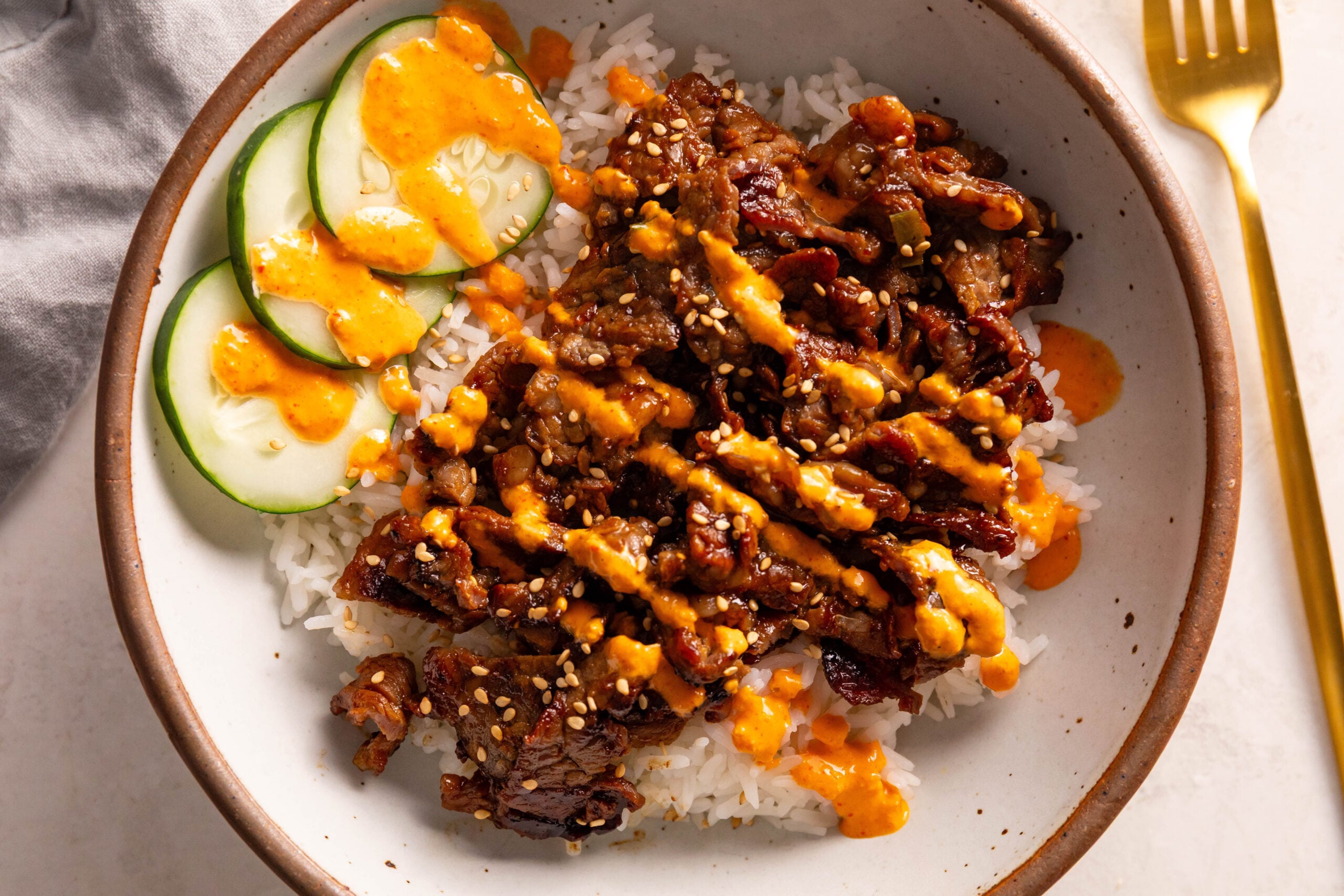
Start with a generous scoop of rice, add the caramelized ribeye, and finish with fresh vegetables and plenty of creamy kimchi sauce.
Keep it simple or load your bowl with your favorite Korean-inspired toppings.
Our Favorite Toppings
- Cucumbers: Thinly sliced cucumbers for cool crunch.
- Kimchi: Add an extra spoonful for more tangy, spicy flavor.
- Green Onions: Sprinkle sliced green onions over the top.
- Sesame Seeds: Toasted sesame seeds add a little texture.
- Fresh Radishes: These add a bright, tangy crunch.
- Fried Egg: Top your bowl with a sunny-side-up egg for a restaurant-style touch. Yummm!
- Avocado: Not a traditional Korean topping, but its creamy texture is nice.
Bulgogi Bowl Recipe FAQs
No, you can leave out the kimchi if you're not a fan, but we definitely recommend giving it a chance! The creamy kimchi sauce has a milder flavor than kimchi on its own because the mayonnaise balances it out. It's creamy, a little spicy, and absolutely delicious with the beef. You might be surprised how much you like it! If you skip the kimchi, you can make a simple spicy mayo with mayonnaise, gochujang, and honey instead.
Sirloin steak is one of the best substitutes for ribeye because it's tender, flavorful, and usually more affordable. Flank steak and skirt steak also work well, but be sure to slice them very thinly against the grain to keep the beef tender. You can also use shaved beef sold in the meat department for a convenient, budget-friendly option. Just remember that leaner cuts can dry out quickly, so avoid overcooking them.
Absolutely! You don't need a flat top grill to make beef bulgogi at home. A cast iron skillet is actually one of our favorite alternatives because it holds heat well and helps create those caramelized edges. Heat the skillet until it's very hot, then cook the beef in small batches without overcrowding the pan.
For the best results, store the cooked beef, rice, vegetables, and creamy kimchi sauce in separate airtight containers in the refrigerator. This keeps the vegetables crisp and prevents the sauce from making the rice soggy. Refrigerate leftovers promptly, within two hours of cooking.
Refrigerator: Store cooked beef and rice for up to 3–4 days. Keep the creamy kimchi sauce refrigerated and use within 3–4 days.
Freezing: Freeze the cooked bulgogi beef in an airtight, freezer-safe container or bag for up to 2–3 months for the best quality. You can also freeze the rice separately. We don't recommend freezing the creamy kimchi sauce. Add fresh cucumber and other raw toppings just before serving.
More Easy Weeknight Dinner Recipes
Looking for more quick and easy weeknight dinner ideas? Try these:




If you tried this Bulgogi Bowl recipe or any other recipe on our blog, consider leaving us a 🌟 star rating and let us know how it went in the 📝 comments!
📖 Recipe
Korean Beef Bulgogi Bowl Recipe
Equipment
- Cast Iron Skillet or Flat Top Griddle
- Blender or Food Processor
- Mixing bowls
Ingredients
Bulgogi Ribeye
- 1 pound thin-sliced ribeye
- ¼ cup soy sauce
- 2 tablespoons brown sugar
- 1 tablespoon honey
- 1 tablespoon sesame oil
- ½ Asian pear peeled and grated
- 2 cloves garlic grated
- 1 ½ teaspoons ginger grated
- 1 tablespoon rice vinegar
- 1 tablespoon green onions sliced
- ½ teaspoon black pepper
- ½ teaspoon gochujang
- ½ teaspoon toasted sesame seeds
Creamy Kimchi Sauce
- ½ cup mayonnaise
- ¼ cup kimchi finely chopped
- 2 tablespoons kimchi brine
- 1 tablespoon gochujang
- 1 teaspoon rice vinegar
- 1 teaspoon honey
- ½ teaspoon sesame oil
- 1 clove garlic grated
For the Bowls
- 4 cups cooked white rice
- 1 cucumber sliced, for garnish
- extra kimchi optional
- green onions sliced, for garnish
- toasted sesame seeds for garnish
Instructions
- Marinate the beef: In a large bowl, combine the soy sauce, brown sugar, honey, sesame oil, grated Asian pear, grated garlic, grated ginger, rice vinegar, green onions, black pepper, gochujang, and toasted sesame seeds. Add the thinly sliced ribeye and gently toss until evenly coated. Cover and refrigerate for 1–2 hours to allow the flavors to develop.
- Prepare the creamy kimchi sauce: Add the mayonnaise, finely chopped kimchi, kimchi brine, gochujang, rice vinegar, honey, sesame oil, and grated garlic to an immersion blender cup, food processor, or blender. Blend until smooth and creamy. Cover and refrigerate until ready to serve.
- Sear the bulgogi ribeye: Preheat a grill or cast iron skillet over high heat. Remove the beef from the marinade, allowing any excess marinade to drip off. Working in small batches to avoid overcrowding, sear the ribeye for approximately 60–90 seconds per side, until cooked through with lightly caramelized edges.
- Assemble the bulgogi bowls: Divide the cooked white rice evenly among 3–4 serving bowls. Top each bowl with the seared bulgogi ribeye, sliced cucumber, optional kimchi, and green onions. Drizzle with the creamy kimchi sauce and finish with a sprinkle of toasted sesame seeds. Serve immediately.
Notes
- For easier slicing: If you're slicing the ribeye yourself, briefly freeze it until firm but not frozen solid. This makes it much easier to cut thin, even slices against the grain.
- Don't skip the marinating time: The marinade adds flavor and helps tenderize the beef. Refrigerate for the recommended time rather than cooking immediately.
- Use high heat: A hot skillet or griddle helps the beef develop caramelized edges instead of steaming. Cook in small batches for the best results.
- Drain excess marinade: Let the excess marinade drip off before adding the beef to the hot skillet. Too much liquid can prevent proper browning.
- Adjust the spice level: Gochujang adds a little heat to both the beef and the kimchi sauce. For a milder version, reduce the gochujang in the sauce. For extra heat, add a little more to taste.
- Make the sauce ahead: The creamy kimchi sauce can be prepared a day in advance and refrigerated in an airtight container. Give it a quick stir before serving.
- Meal prep tip: Store the beef, rice, sauce, and fresh toppings separately. Reheat the beef and rice, then add the cold toppings and creamy kimchi sauce just before eating.


Leave a Reply